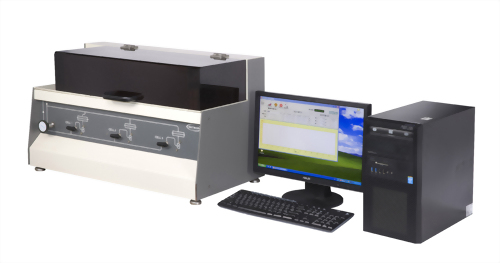
Gas Permeability Testers for Rubber & Polymers
Mastering Elastomer Barrier Properties
For products like tubeless tire inner liners, pneumatic bladders, and aerospace seals, retaining internal gas pressure is a critical safety and performance factor. EKTRON TEK's Gas Permeability Testers are engineered to precisely measure the rate at which gas molecules permeate through solid rubber and polymer films under controlled temperature and pressure conditions.
- Global Standard: Strictly engineered in accordance with the ISO 2782-1 test method.
- Application Focus: Essential for formulating low-permeability compounds (like butyl rubber) for the global tire industry.
- Dynamic Analysis: Accurately draws pressure vs. time curves to calculate precise gas transmission rates.
Frequently Asked Questions: Gas Permeability Testing
Explore the EKT-2128BR Multi-Station Tester
Discover our high-precision system featuring 3 independent sample holders, hot water circulation for absolute temperature stability, and advanced Windows tracking software.
View EKT-2128BR Technical Specs