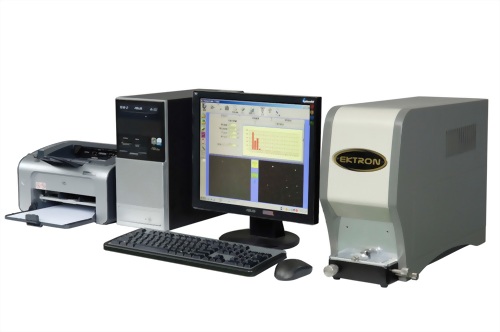
Mixing Graders for Carbon Black Dispersion & Polymers
The Critical Role of Carbon Black Dispersion
In rubber compounding, the degree of filler dispersion directly dictates the final mechanical performance. EKTRON TEK's Mixing Graders provide a standardized, digital method to quantify carbon black agglomerates, ensuring your compound achieves optimal reinforcement and durability.
- Global Standards: Fully compliant with ASTM D2663 and ISO 11345 (comparative and digital methods).
- Precision Imaging: High-resolution digital analysis replaces subjective visual inspection for consistent QC.
- Process Optimization: Essential for determining optimal mixing times and energy inputs in the laboratory and factory.
Frequently Asked Questions: Mixing & Dispersion
Explore the EKT-2002MG Digital Grader
Equipped with high-sensitivity optics and patented specimen cutting technology for the most accurate dispersion analysis.
View EKT-2002MG Technical Specs